
The Approach
Understand. Build. Grow.
In that order, on purpose.
Every BYKP engagement follows the same three phases, whether it's a physio clinic, a jewellery brand or a winery. This page is how it works, with the proof.
01 Understand
Let's remove the guesswork.
Who's buying, why they choose you, and what your existing site already tells us. Worked through together, before anything gets designed.
Business & offer
Positioning you can say in one sentence.
Customer
Who's buying and how they decide. Every later decision gets tested against them.
Existing data
What to protect and what to cut, before a single page gets designed.
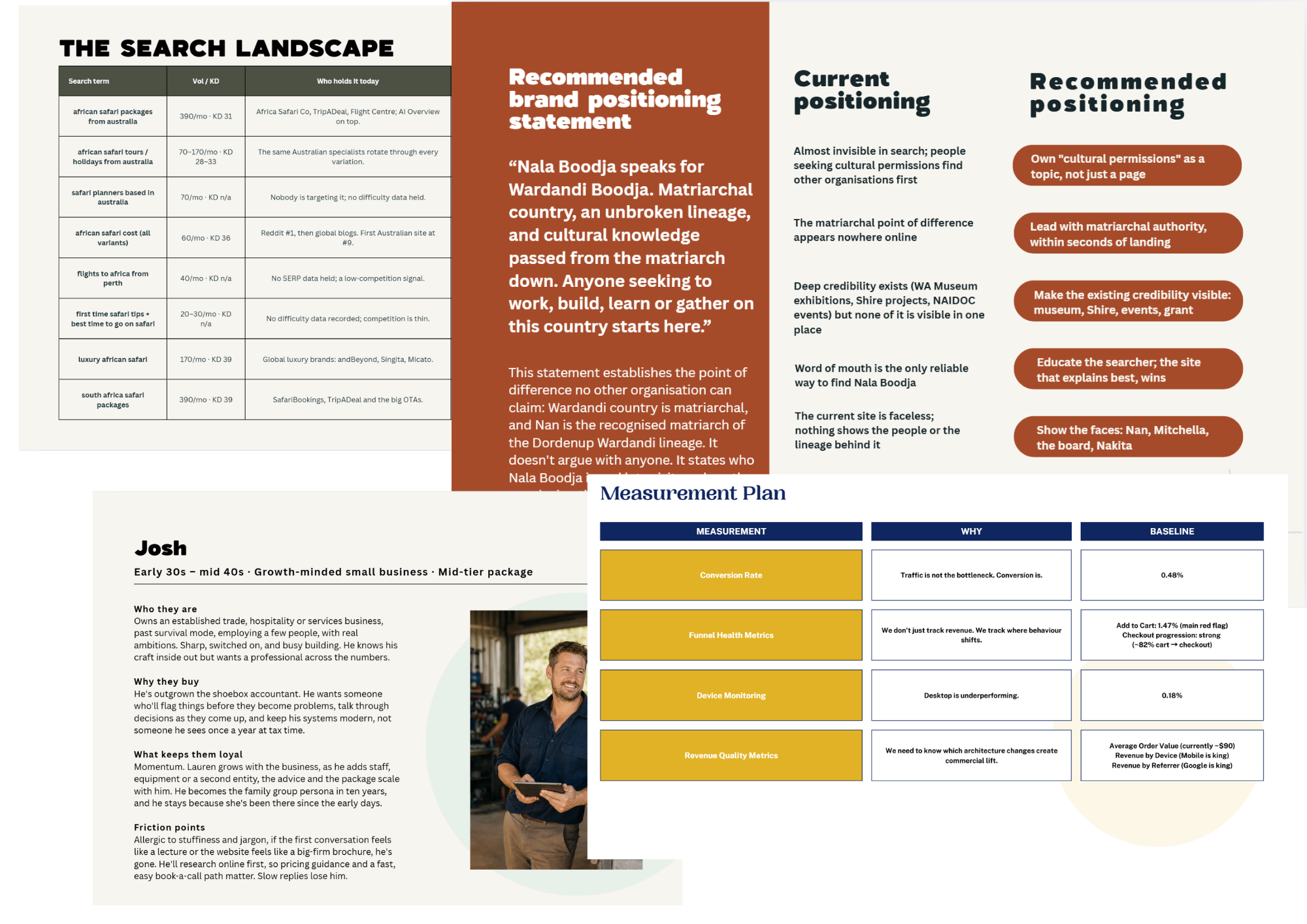
What this phase produces
Strategic Blueprint
Findings, personas, keyword research, site map and positioning. One document every later decision answers to.
There's no version of working with BYKP that skips it.
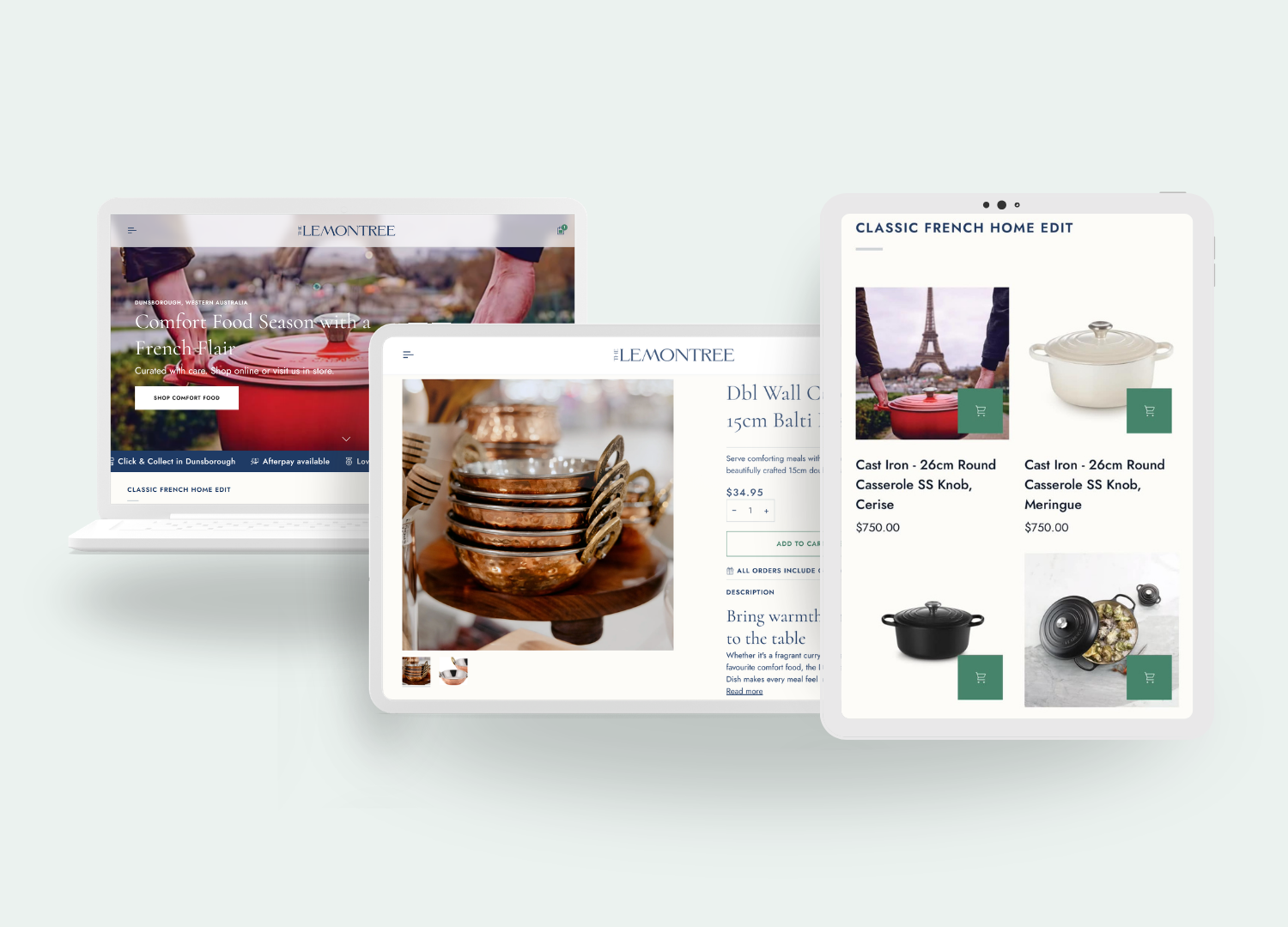
In practice the LemonTree
Customers weren't browsing homewares, they were asking "what do I get them?" So the store was rebuilt around gifts.
02 Build
The website gets built around what the strategy revealed. Not the other way around.
The Blueprint becomes the architecture, the words, the design and the platform. Reviewed by walkthrough video, not forty-email chains, and handed over with training so the site belongs to your team.
How it's found
Keyword-led pages
Site structure
Titles & metadata
Location pages
How it's structured
Site map
Navigation
Product architecture
Booking & enquiry flows
How it converts
Trust signals
Email capture
Cross-sells
Apps & integrations
For stores, there's a dedicated page on Shopify and ecommerce builds.
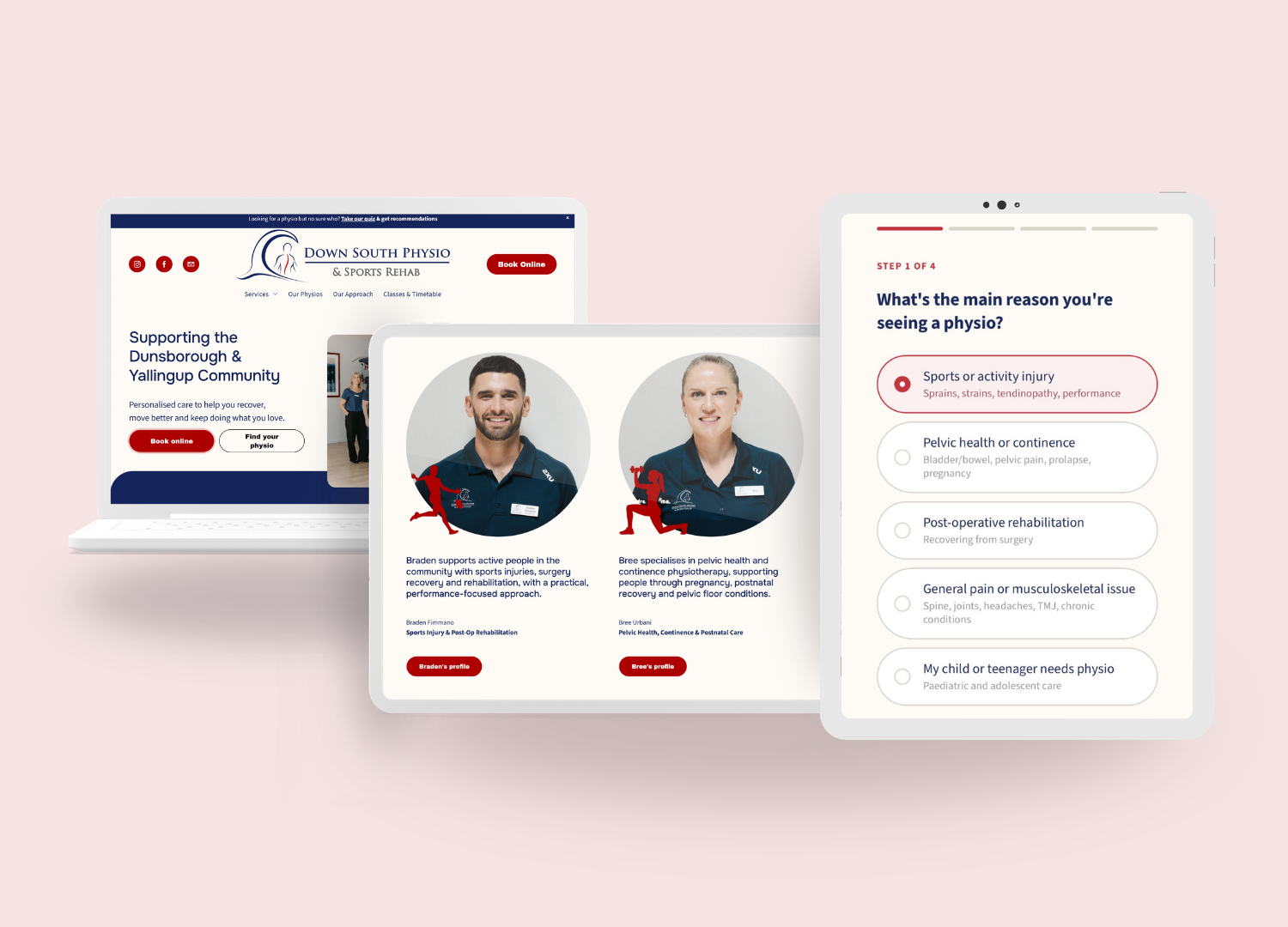
In practice Down South Physio
A grown team was hidden behind a flat list of services. Now a four-step quiz walks each patient to the right physio.
03 Grow
Launch isn't the finish line. It's the starting position.
Once people find it, the site goes to work across the channels your customers already use. Most relationships settle into a cadence from here: the person who built the system keeps tuning it, and results get published when the data has matured, not before.
Every channel is wired into the site, not bolted beside it
Google Ads
Making every click count.
Without a site built to convert ad traffic, you pay twice: once for the click, and again when they leave.
Ads strategy
Campaign setup
Conversion tracking
Ongoing optimisation
Socials
Turning likes into leads.
Wired into the website, every post keeps working long after the scroll.
Tracking pixels
UTM links
Retargeting
Profile setup
Customers you've already won.
The cheapest sale is the second one.
Platform setup
Signup capture
Automations
Campaign templates
Analytics
The only proof of payoff.
Without tracking, every marketing dollar you spend stays a guess.
Google Analytics
Tag setup
Event tracking
Search Console
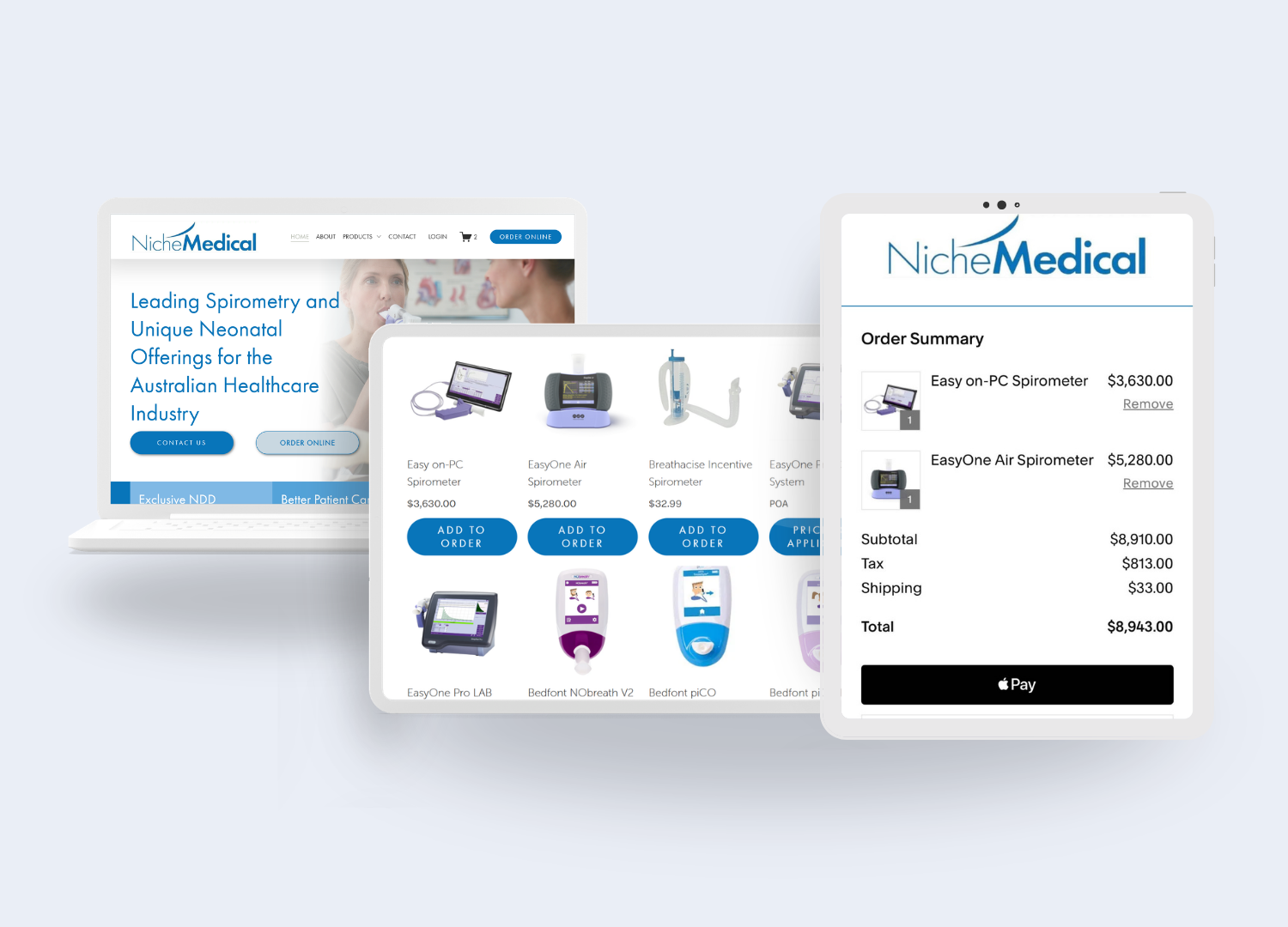
In practice Niche Medical
Search visibility up 134% in five months, from SEO decisions made back in Understand.
The relationship is still running: newsletters, technical work, a steady cadence.
This works brilliantly for some businesses.
And not for others.
It tends to fit when…
Founder-led, established, and ready for the website to pull its weight.
You want the thinking as much as the build.
One accountable expert, not a rotating cast.
You're thinking in years, not weeks.
The businesses here still work with BYKP long after launch.
It tends not to when…
It needs to be live by Friday.
Good strategy has a pace, and it isn't that one.You're choosing on price.
There are cheaper ways to get a website, and some of them are fine.The brief is already locked and the job is just to execute it.
If you read the left-hand column and nodded,
let's talk
No pitch, no pressure. Just a real conversation about where you're at and where a strategy-led website could take you.